
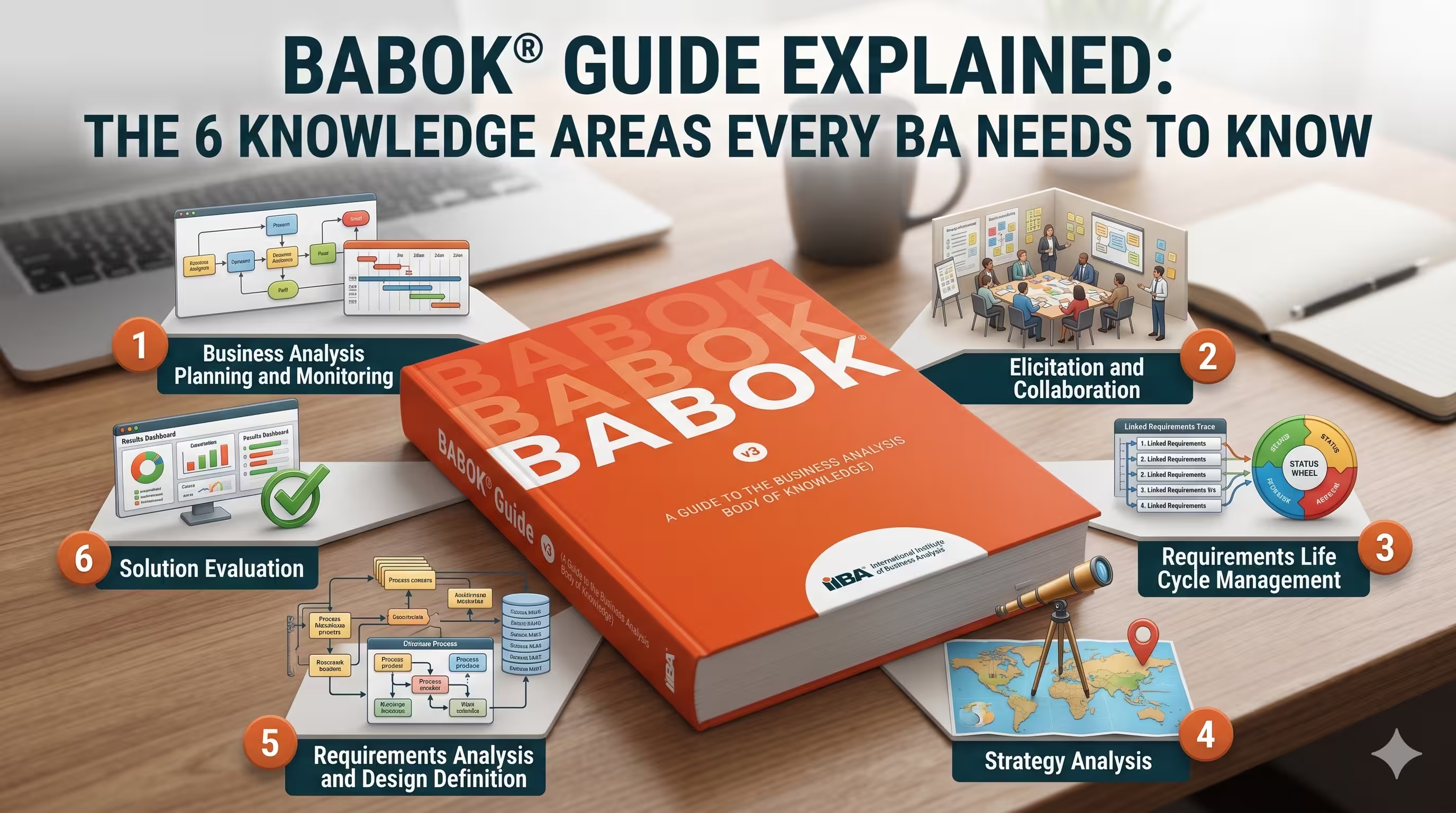
BABOK Guide Explained: The 6 Knowledge Areas Every BA Needs to Know
What is the BABOK Guide?
The BABOK Business Analysis Body of Knowledge is the globally recognised framework published by the IIBA (International Institute of Business Analysis). It defines what business analysis is, what a business analyst does, and the competencies required to do it well.
The current version, BABOK v3, organises business analysis work into six knowledge areas, each containing a set of tasks, techniques, and inputs and outputs. It also underpins the IIBA certification pathway the ECBA for entry-level practitioners, the CCBA for those with a few years of experience, and the CBAP for senior business analysts.
It’s worth saying clearly: the BABOK is not a methodology. It doesn’t tell you to use agile or waterfall. It describes what needs to happen in business analysis work, not how or in what order. That flexibility is part of what makes it useful across contexts whether you’re an agile business analyst embedded in a product squad or a traditional BA on a large-scale ERP implementation.
Why the BABOK matters for your BA career
Before we get into the six knowledge areas, here’s why this matters practically.
Understanding the BABOK gives you a common vocabulary. When you join a new team or organisation, you can describe what you do in terms that other BAs, project managers, and stakeholders understand. It gives you a framework for diagnosing gaps if a project is going sideways, the BABOK helps you identify which knowledge area is being neglected. And for those pursuing IIBA certification, it’s the foundation everything is built on.
Skills needed to become an IT business analyst in 2026 almost always appear in job descriptions in BABOK language, even when hiring managers don’t realise it. Requirements gathering, stakeholder analysis, solution assessment these are all BABOK knowledge areas in disguise.
- Business Analysis Planning and Monitoring
Before any requirements gathering begins, a good business analyst plans the approach who to involve, how to engage them, what level of formality the project needs, and how to track quality throughout. This knowledge area is where senior BAs earn their reputation. Skipping it is one of the most common reasons projects run into trouble early.
- Elicitation and Collaboration
This is the discovery work interviews, workshops, observation, document analysis, and prototyping that draws out what stakeholders actually need. Business analyst requirements gathering sounds simple, but stakeholders often describe symptoms, not root causes. The BA’s job is to ask the right questions, facilitate honest conversations, and synthesise what’s said into something the delivery team can act on.
- Requirements Life Cycle Management
Requirements don’t stay static once written. This knowledge area covers tracing, prioritising, updating, and approving requirements as the project evolves. For agile business analysts, this is essentially backlog management writing user stories, keeping them refined, and ensuring every item links back to a real business need. It’s how scope creep gets controlled before it starts.
- Strategy Analysis
This is the knowledge area that separates good BAs from great ones. Before recommending any solution, a BA should understand the current state of the business, define the desired future state, and identify the gap between them. Organisations frequently arrive with a solution already decided. Strategy analysis gives BAs the tools root cause analysis, capability assessment, value stream mapping to validate whether that solution is actually the right one.
- Requirements Analysis and Design Definition
This is where raw elicited information gets shaped into something buildable. Process models, data models, user stories, acceptance criteria, wireframes all of it lives here. It’s the most technique-heavy knowledge area and the one most CBAP certification exam questions draw from. The test of good requirements analysis is simple: can the delivery team build the right thing from what you’ve produced?
- Solution Evaluation
Once something is delivered, did it actually solve the problem? This knowledge area is about measuring outcomes against the original business objectives, identifying gaps in what was delivered, and recommending next steps. It’s the most overlooked part of the BA role and the most important for building credibility. A BA who closes the feedback loop is one stakeholders trust with the next initiative.
Which IIBA certification covers all of this?
All three ECBA, CCBA, and CBAP are built on these six knowledge areas. The ECBA tests conceptual understanding, the CCBA tests applied knowledge, and the CBAP tests judgment-level thinking in complex scenarios. If you’re starting out, learn the knowledge areas thoroughly. Everything else in the certification pathway builds on them.